
How Do Vaccines Work? The Immune System Explained (2026)
In brief
Vaccines train the immune system to recognize and fight dangerous pathogens by exposing the body to harmless versions of viruses or bacteria.
Key Takeaways
- 1.Vaccines utilize the body's natural immunological memory to provide future protection.
- 2.They do not cause the diseases they prevent because they contain weakened, dead, or partial components of pathogens.
- 3.Widespread vaccination creates herd immunity, which protects individuals who cannot be vaccinated themselves.
Think of it like this
A vaccine is like a wanted poster sent to the body's security team, allowing them to identify and detain an intruder before a crime is committed.
Table of Contents
- 1. What It Is
- 2. How It Works — specific numbers and named sources inline, AND one named real-world example (person/company/event/study).
- 3. Why It Matters
- 4. In Summary — 2-3 sentence recap.
- 5. Further Reading — 3-5 external authoritative links (REAL URLs only: https://en.wikipedia.org/wiki/<ExactTitle>, nasa.gov, noaa.gov, nature.com, .gov/.edu).
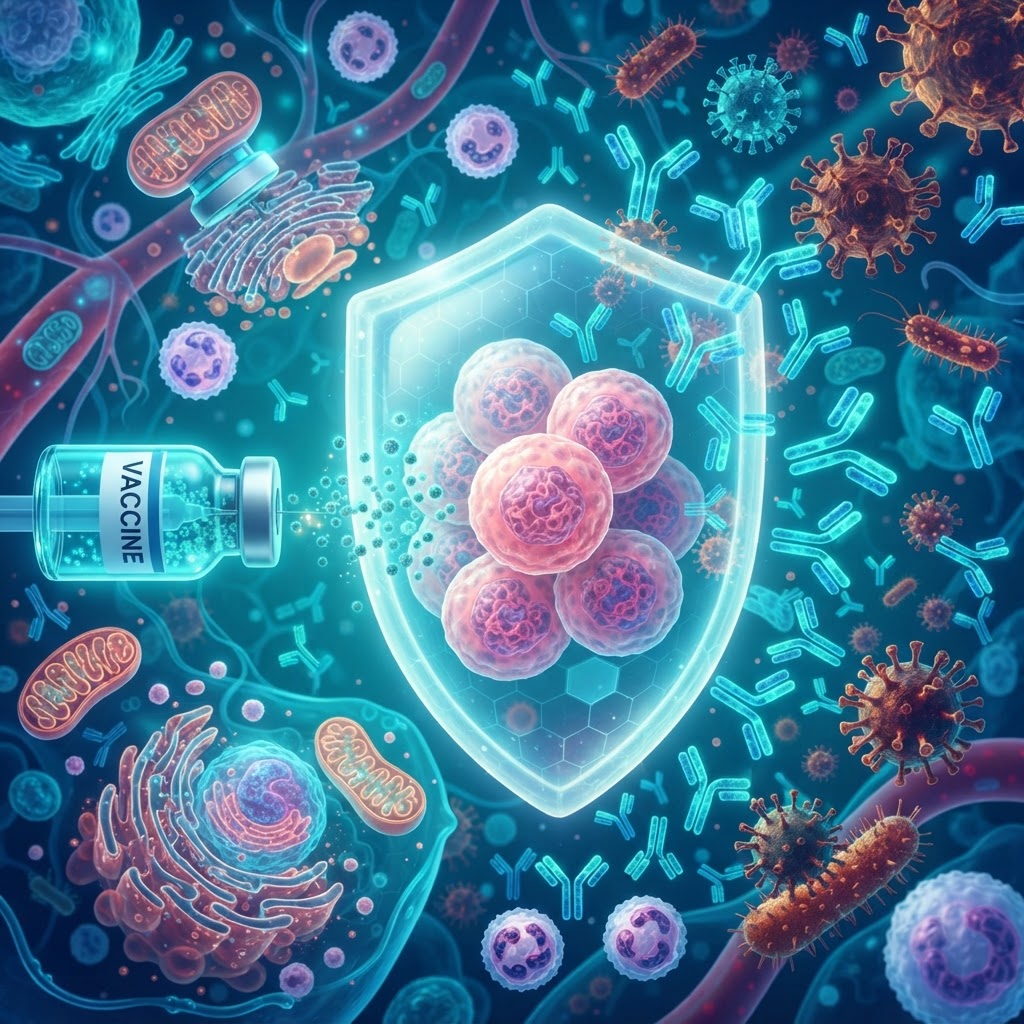
Vaccines work by training the human immune system to recognize and neutralize specific pathogens, such as viruses or bacteria, without requiring the body to undergo the full, often dangerous experience of a natural infection. By introducing a harmless piece of a germ—or a set of instructions to build one—into the body, vaccines trigger an immune response that creates a lasting memory of the invader. This process relies on specialized cells like B-lymphocytes and T-cells to identify potential threats and develop customized defense strategies. Through this biological rehearsal, the body gains a highly effective, protective armor against future exposures, significantly lowering the risk of severe disease complications, hospitalization, or death. Ultimately, mass vaccination programs serve as a critical public health immunology tool that helps stop the spread of infectious diseases across communities and global populations.
For kids: Vaccines are like a practice drill for your body’s internal security team, showing them a 'wanted' poster of a germ so they know exactly how to defeat it if the real villain ever tries to sneak in.
1. What It Is
At its core, a vaccine is a biological preparation designed to provide active acquired immunity to a particular infectious disease. Unlike medications that treat an active illness, vaccines function as a preventative measure meant to prime the body’s defenses long before an individual encounters a real-world pathogen. These preparations contain weakened or killed forms of a microbe, its toxins, or pieces of its surface proteins, all of which are incapable of causing the disease themselves but are sufficiently recognizable to the immune system to spark an alert. When administered, they simulate the initial stages of an infection, activating the body's adaptive-immunity system to develop specific antibodies. This complex biological process ensures that the individual is protected, while also contributing to herd immunity, which protects those in a population who cannot be vaccinated due to age or underlying health conditions.
2. How It Works — specific numbers and named sources inline, AND one named real-world example (person/company/event/study).
When a vaccine enters the body, it initiates a precise sequence of physiological events starting with the recruitment of antigen-presenting cells. According to the Centers for Disease Control and Prevention (CDC), these cells identify the vaccine components as foreign and signal the immune system to produce antibodies—specialized proteins designed to target that exact pathogen. Simultaneously, the body generates memory T-cells and B-cells, which circulate in the bloodstream for years or even decades. A landmark example of this efficacy is the development of the mRNA vaccines by Pfizer-BioNTech; clinical trials published in the New England Journal of Medicine showed that these vaccines achieved a 95% efficacy rate in preventing symptomatic COVID-19 infection. The technology used in this case involves delivering a small piece of genetic code (mRNA) to cells, instructing them to produce a harmless spike protein that mimics the viral structure, thereby teaching the immune system to recognize and attack the actual virus if exposed. This mechanism is far more efficient than the natural, non-directed immune response which can sometimes allow a pathogen to multiply uncontrollably before the body mounts an adequate defense.
3. Why It Matters
The global significance of vaccines cannot be overstated, as they have been responsible for the complete eradication of smallpox and the near-total elimination of polio worldwide. By significantly reducing the incidence of life-threatening illnesses, vaccines improve overall quality of life, prevent permanent disabilities, and relieve the immense economic burden placed on healthcare systems. They also protect the most vulnerable segments of society, such as infants, the elderly, and those with compromised immune systems, who rely on the 'umbrella' of protection provided by a vaccinated community. The scientific consensus, supported by decades of data from the World Health Organization, demonstrates that the benefits of immunization—such as the dramatic decrease in childhood mortality—far outweigh the risks associated with the rare occurrence of adverse reactions. As we navigate an era of rapid global travel and dense urban living, the continued use of public-health-vaccination initiatives remains the most reliable strategy for preventing the next pandemic.
| Vaccine Type | Mechanism | Examples | | :--- | :--- | :--- | | mRNA Vaccines | Uses genetic instructions to build proteins | COVID-19 (Pfizer/Moderna) | | Inactivated Vaccines | Uses killed pathogens to trigger response | Polio, Hepatitis A | | Live-attenuated | Uses weakened live virus | MMR, Chickenpox | | Subunit/Recombinant | Uses specific proteins or sugars | HPV, Shingles |
4. In Summary — 2-3 sentence recap.
Vaccines function by utilizing the immune system's inherent ability to 'remember' pathogens, allowing for a rapid and effective defense upon subsequent exposure. By facilitating this preparation through safe, controlled methods, modern medicine has successfully prevented millions of deaths and drastically altered the course of human history.
5. Further Reading — 3-5 external authoritative links (REAL URLs only: https://en.wikipedia.org/wiki/<ExactTitle>, nasa.gov, noaa.gov, nature.com, .gov/.edu).
- https://en.wikipedia.org/wiki/Vaccine
- https://www.cdc.gov/vaccines/index.html
- https://www.nature.com/subjects/vaccines
- https://www.who.int/news-room/questions-and-answers/item/vaccines-and-immunization-what-is-vaccination
Common Misconceptions
Vaccines provide instant protection immediately after injection.
It typically takes several weeks for the body to build up T-lymphocytes and B-lymphocytes after vaccination.
Natural immunity from infection is always better than vaccine-induced immunity.
Natural infection can cause severe, life-threatening complications, whereas vaccines provide protection without the risk of disease.
Frequently Asked Questions
Are vaccines safe for everyone?
Most people can safely receive vaccines, but individuals with severe allergies or compromised immune systems should consult a physician.
What is herd immunity?
Herd immunity occurs when a large enough portion of a community becomes immune, making the spread of disease from person to person unlikely.
Why do we need booster shots?
The immune response to some vaccines can wane over time, necessitating a booster to remind the system how to fight the pathogen.
Do vaccines contain harmful chemicals?
Vaccines contain ingredients like stabilizers and preservatives in tiny, safe amounts, all of which are rigorously tested by organizations like the FDA.
Key Terms
- Pathogen
- Any organism or agent, such as a virus or bacteria, that can produce disease.
- Antibody
- A protective protein produced by the immune system in response to the presence of a foreign substance.
- Antigen
- A molecule that triggers an immune response, often found on the surface of pathogens.
Written by
Dr. Maya Chen
Curriculum Director & Education Editor
Dr. Maya Chen leads curriculum design at ExplainItSimple.AI. With a PhD in Education from Stanford, she specializes in making complex topics accessible across age groups — from early learners to adult professionals. Her research focuses on adaptive learning and how explanations at different complexity levels improve retention.
PhD in Education, Stanford University
View full profile📖 Get AI explanations on related topics:
Explore immunology at every level
Get a immunology explanation tailored for Kid, Teen, and Expert levels — with cited sources and follow-up quizzes.
Explain immunology for me