Jargon: The Best Tool to Understand Complex Terms Quickly (2026)
In brief
Jargon is specialized vocabulary used within a professional or academic group to improve communication efficiency and maintain technical precision.
Key Takeaways
- 1.Jargon serves as a linguistic tool to facilitate rapid communication among specialists.
- 2.The use of specialized terminology often creates a barrier for those outside the specific profession.
- 3.Translating jargon into plain language is essential for public accessibility and broader understanding.
Think of it like this
Jargon acts like a secret shorthand code that allows experts to complete complex sentences in seconds, much like how a chef uses specific kitchen terminology to coordinate a busy meal service without explaining every single tool.
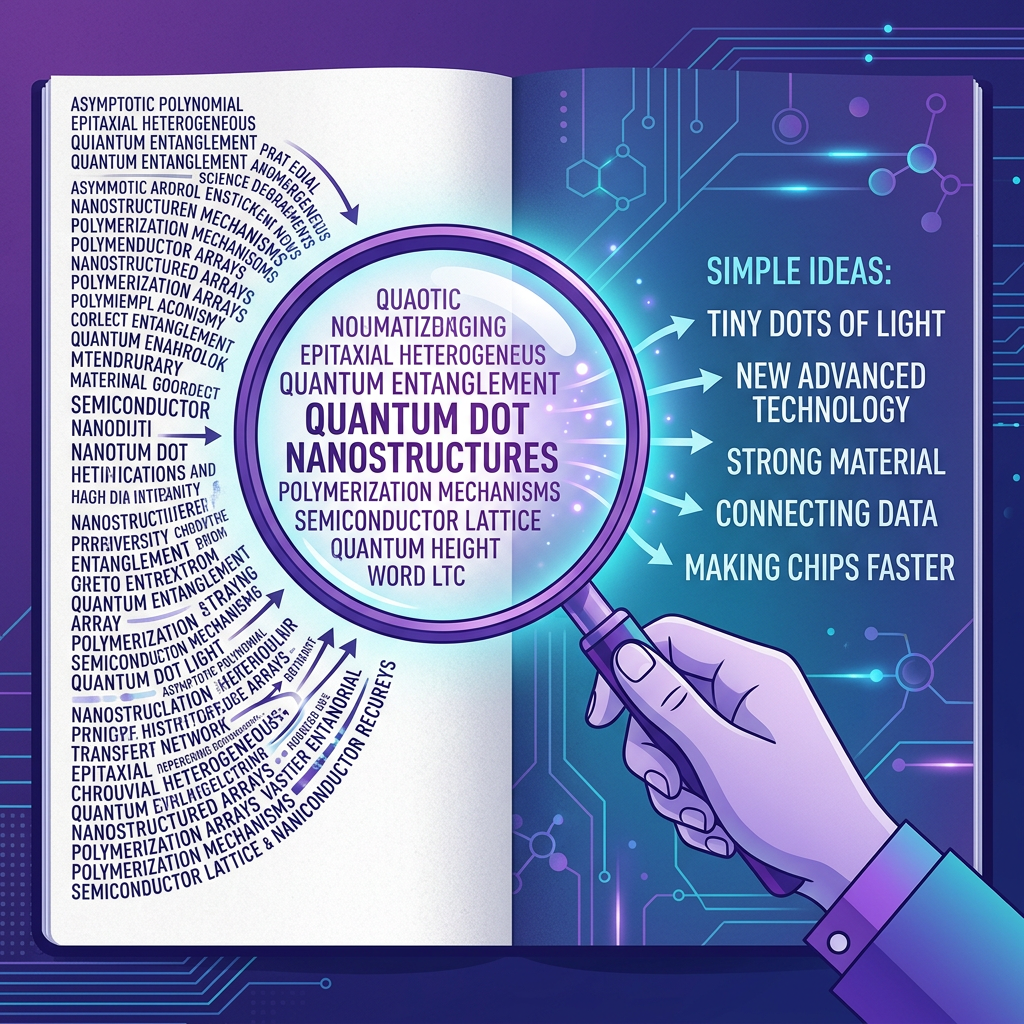
Jargon is the specialized terminology used by a particular group or profession, and it serves as the ultimate linguistic shortcut for subject matter experts who need to communicate with precision. While often viewed as an exclusionary barrier by those on the outside, jargon acts as a high-bandwidth mechanism for conveying complex concepts, technical specifications, or nuanced situational variables without wasting time on foundational definitions. By adopting the right tools and mental frameworks, anyone can decode these dense linguistic landscapes, effectively transforming inaccessible technical speak into actionable, clear insights. Mastery of this skill prevents information silos, facilitates cross-disciplinary collaboration, and empowers individuals to navigate professional fields with newfound speed and confidence. Understanding how to rapidly interpret industry-specific dialects is arguably the most effective tool for accelerating personal learning and professional productivity in the modern knowledge economy.
For kids: Jargon is like a secret code used by people in the same job or hobby to talk quickly, but if you look up the words, you can learn their secrets too.
1. What It Is
Jargon consists of the unique vocabulary, acronyms, and shorthand phrases that define a specific trade, science, or hobby. It is rarely intended to be deliberately confusing; rather, it evolves as a functional necessity to describe phenomena that do not have common or simple counterparts in general language. For instance, in the field of medicine, terms like myocardial infarction are utilized to specify a particular type of heart tissue death that would require a lengthy, inaccurate sentence to describe in lay terms. By encapsulating complex ideas into single words, practitioners can exchange vast amounts of data in a matter of seconds, fostering efficient communication within niche environments.
2. How It Works
To decode jargon effectively, one must look at the structural context of the phrase and map it against established definitions found in technical repositories. Researchers at the University of Cambridge have noted that effective vocabulary acquisition occurs best through pattern recognition rather than rote memorization. For example, consider the financial term quantitative easing, which describes a monetary policy tool where a central bank purchases government securities to increase money supply and lower interest rates. If you analyze this, you can see it functions as a set of mechanical levers rather than a mysterious concept. A real-world example is how the company SpaceX utilizes its specific internal vocabulary for rocketry, such as the term delta-v, which refers to the change in velocity required for a maneuver. By maintaining an internal glossary for these terms, their engineering teams ensure that a shift in trajectory for a Falcon 9 rocket is communicated with zero ambiguity during the critical phases of mission control operations.
3. Why It Matters
Jargon functions as a gatekeeper of knowledge, and learning to interpret it is the fastest way to gain entry into high-level professional discourse. When you break down technical language, you are not just learning vocabulary; you are uncovering the underlying logic, constraints, and priorities of an industry. This intellectual transparency allows professionals to bridge the gap between their unique expertise and the broader market needs. Furthermore, it creates a feedback loop where you become capable of identifying when technical terms are being used correctly versus when they are being used as a smoke screen to hide a lack of actual substance or progress.
| Term | Plain English Meaning | Industry | | :--- | :--- | :--- | | Latency | The delay before a transfer of data begins | Computing | | Liquidity | How easily an asset can be converted to cash | Finance | | Biosphere | The global sum of all ecosystems | Science | | Iteration | The repetition of a process to generate a result | Engineering |
4. In Summary
Jargon is an essential linguistic tool that provides a shorthand for complex ideas, allowing for rapid communication within specialized fields. By actively deconstructing these terms using reliable resources, you can unlock professional expertise and gain a deeper understanding of how modern industries function.
5. Further Reading
- https://en.wikipedia.org/wiki/Jargon
- https://www.nasa.gov/centers/kennedy/about/information/shuttle_glossary.html
- https://www.nature.com/nature-research/editorial-policies/writing-and-style
- https://www.noaa.gov/glossary
Common Misconceptions
Jargon is always designed to sound elitist or confuse people.
Jargon is primarily a tool for precision and brevity among experts within a field.
All specialized language is considered jargon.
Jargon specifically refers to language that is unintelligible to outsiders, whereas technical terminology might be standard in a broader scientific context.
Frequently Asked Questions
Why do professionals use jargon?
Professionals use jargon to communicate complex ideas faster and more accurately by using established, shorthand vocabulary.
Is jargon always harmful to communication?
No, jargon is highly effective within a closed group, but it becomes a barrier when communicating with the general public.
How can I understand jargon better?
You can use AI tools, dictionaries, or context clues to bridge the gap between technical terms and common language.
What is the best way to avoid using jargon?
The best way is to apply the plain language principle: write for the intended audience, not for your peers.
Key Terms
- Plain Language
- Communication that is structured so the audience can understand it the first time they read or hear it.
- Specialized Vocabulary
- Words or phrases that are specific to a particular domain, trade, or academic discipline.
- Lexical Shorthand
- The use of shortened terms or symbols to represent complex concepts in a concise manner.
Written by
Dr. Maya Chen
Curriculum Director & Education Editor
Dr. Maya Chen leads curriculum design at ExplainItSimple.AI. With a PhD in Education from Stanford, she specializes in making complex topics accessible across age groups — from early learners to adult professionals. Her research focuses on adaptive learning and how explanations at different complexity levels improve retention.
PhD in Education, Stanford University
View full profile📖 Get AI explanations on related topics:
Explore Jargon at every level
Get a Jargon explanation tailored for Kid, Teen, and Expert levels — with cited sources and follow-up quizzes.
Explain Jargon for me