How Do Solar Panels Turn Sunlight Into Electricity? (2026)
In brief
Solar panels convert sunlight into electricity using the photovoltaic effect, which allows semiconductor materials to generate current when exposed to light.
Key Takeaways
- 1.Solar panels utilize the photovoltaic effect to convert photons into electrons.
- 2.Silicon is the primary semiconductor material used in most commercial solar panels.
- 3.Inverters are necessary to convert DC electricity from panels into usable AC power for homes.
Think of it like this
A solar cell acts like a tiny, light-sensitive gate that releases a flood of water whenever a sunbeam strikes its surface.
Solar panels turn sunlight into electricity through a remarkable process called the photovoltaic effect, which allows specialized materials to convert photons directly into a flow of electrons. When sunlight strikes the surface of a solar cell, the energy from the light particles knocks electrons loose from their atoms, creating an electrical current that can be harnessed to power our homes, businesses, and critical infrastructure. This clean, renewable energy source has become a cornerstone of the global transition away from fossil fuels, providing a sustainable alternative that scales from small portable chargers to massive utility-scale installations covering thousands of acres. By understanding the underlying physics, we can better appreciate how this technology enables a cleaner, more electrified future while reducing our collective carbon footprint across the globe.
For kids: Solar panels act like tiny traps that catch rays of light from the sun and turn them into the invisible magic we call electricity, which travels through wires to power your toys and lights.
1. What It Is
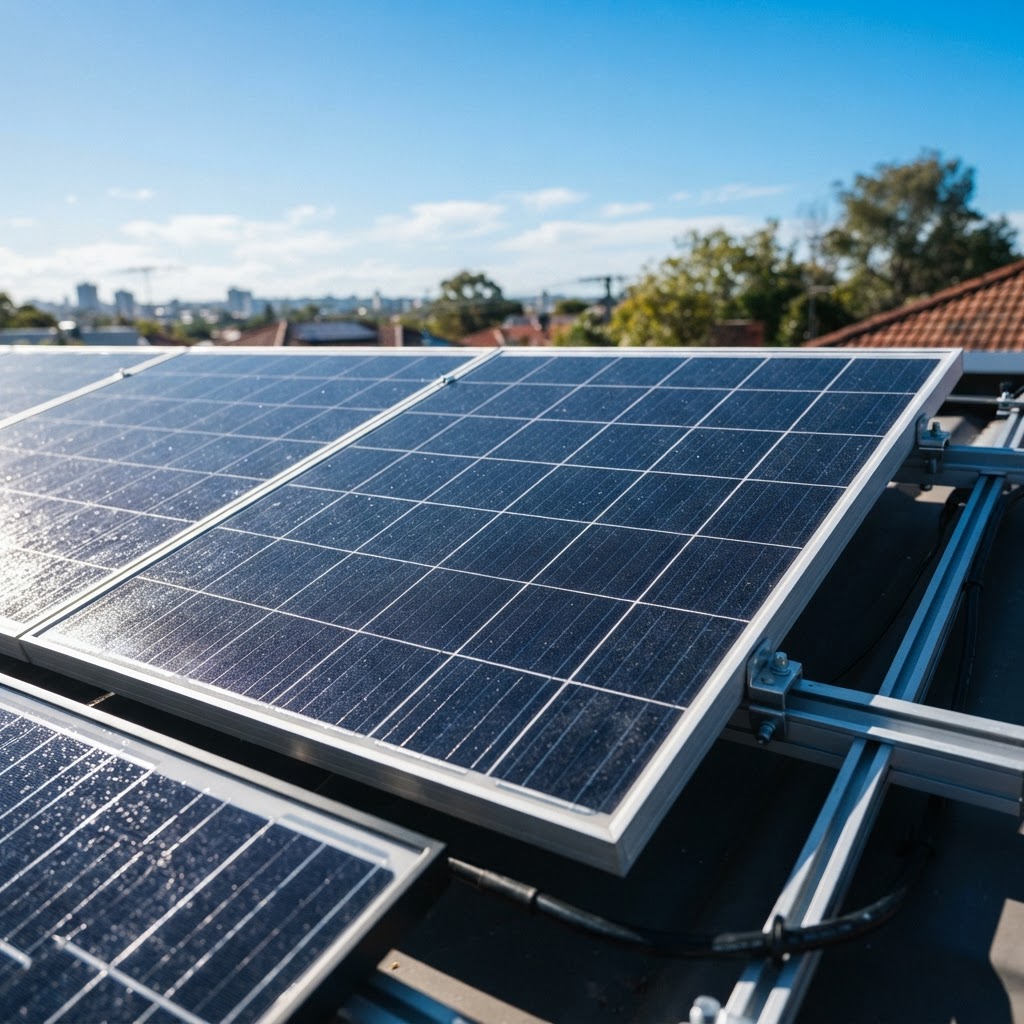
At its core, a solar panel is a collection of smaller units called photovoltaic cells, typically crafted from high-purity silicon. These cells are arranged in a grid-like pattern within a protective glass casing, designed to maximize exposure to direct sunlight while remaining durable against harsh weather conditions like hail, wind, and extreme temperature fluctuations. The silicon used in these panels is a semiconductor, meaning it can be engineered to allow or block the flow of electricity depending on the specific electrical charge applied to different layers of the wafer.
When light hits these silicon atoms, it creates an energetic reaction that generates a flow of direct current (DC) electricity. This electricity is then captured by thin metal contacts printed on the surface of the cell, which aggregate the current into a usable stream. Because most household appliances and the national power grid operate on alternating current (AC), the electricity produced must pass through an inverter before it can be safely used to run your dishwasher or charge your laptop. Modern solar energy systems are marvels of material science, often incorporating anti-reflective coatings to ensure that almost every photon is absorbed rather than bouncing off the surface.
2. How It Works
To understand the conversion process, consider the p-n junction created by doping silicon with other elements like phosphorus and boron. According to the National Renewable Energy Laboratory (NREL), a standard commercial silicon cell typically achieves an efficiency rating between 17% and 22%, meaning roughly one-fifth of the sunlight hitting the panel is successfully converted into usable power. When a photon with sufficient energy strikes a silicon atom, it displaces an electron, creating a hole-electron pair that migrates toward the electrical contacts, effectively creating a circuit.
Take the example of the Topaz Solar Farm in California, which spans roughly 9.5 square miles and utilizes over 9 million thin-film cadmium telluride solar modules. This facility, operated by BHE Renewables, demonstrates how large-scale utility projects utilize this physical process to power approximately 160,000 homes annually. By scaling the microscopic movement of electrons to a field-level operation, engineers can generate over 550 megawatts of peak capacity, highlighting the sheer industrial potential of the photovoltaic effect when implemented at a massive scale.
3. Why It Matters
As the world moves toward aggressive decarbonization goals, the importance of efficient renewable energy cannot be overstated. Solar panels provide a decentralized way to generate power, reducing the reliance on massive power plants that often burn coal or natural gas. By lowering the cost of electricity and providing resilience against grid failures, solar technology empowers consumers to take control of their own power generation, especially when combined with battery storage solutions.
Furthermore, the long-term environmental impact of solar power is significantly lower than that of conventional energy sources. Once a solar panel is manufactured and installed, it produces zero emissions during operation, running quietly and reliably for 25 to 30 years or more. As the technology continues to mature, we are seeing improvements in circular manufacturing, where retired panels are increasingly recycled to recover valuable materials like silver, copper, and high-purity silicon, ensuring a sustainable lifecycle for the equipment.
| Feature | Standard Silicon PV | Thin-Film PV | | :--- | :--- | :--- | | Efficiency | 17-22% | 10-13% | | Material Thickness | Thick Wafers | Very Thin Layers | | Flexibility | Rigid/Heavy | Lightweight/Flexible | | Common Use | Residential Rooftops | Utility-Scale Arrays |
4. In Summary
Solar panels utilize the photovoltaic effect to convert sunlight into direct current electricity by displacing electrons within silicon cells. This sustainable technology provides a scalable, low-emission solution that plays a vital role in meeting the global demand for clean, renewable power.
5. Further Reading
https://en.wikipedia.org/wiki/Photovoltaics https://www.nrel.gov/research/re-photovoltaics.html https://www.nasa.gov/mission_pages/station/research/news/solar_power_on_station https://www.nature.com/subjects/solar-cells
Common Misconceptions
Solar panels only work on bright, sunny days.
Solar panels can generate electricity on cloudy days, though their efficiency is reduced due to lower light intensity.
Solar panels generate heat to produce electricity.
Solar panels operate on light absorption, not heat; in fact, extreme heat can slightly decrease their efficiency.
Frequently Asked Questions
Do solar panels work at night?
No, solar panels require sunlight to generate electricity and stop producing power once the sun sets.
What is the lifespan of a solar panel?
Most solar panels have a warrantied lifespan of 25 to 30 years, though they can continue to function beyond that.
Are solar panels bad for the environment?
While manufacturing requires resources, solar panels significantly reduce carbon emissions over their lifetime compared to fossil fuels.
Can solar panels power an entire house?
Yes, a properly sized array with adequate storage can provide electricity for an entire home, depending on local sunlight availability.
Key Terms
- Photovoltaic effect
- The process of generating voltage or electric current in a material upon exposure to light.
- Semiconductor
- A material, like silicon, that has electrical conductivity between a conductor and an insulator.
- Inverter
- A device that changes direct current (DC) electricity into alternating current (AC) for household use.
📖 Get AI explanations on related topics:
Explore energy at every level
Get a energy explanation tailored for Kid, Teen, and Expert levels — with cited sources and follow-up quizzes.
Explain energy for me