How Does the Brain Control Our Body? Neuroscience Basics (2026)
In brief
The human brain serves as the central command center of the nervous system, processing sensory data and sending signals to coordinate all bodily actions.
Key Takeaways
- 1.The brain communicates with the body through an intricate network of neurons and electrical impulses.
- 2.The central nervous system acts as the primary processing unit for all physical and cognitive functions.
- 3.Peripheral nerves carry instructions from the brain to muscles and organs to maintain homeostasis.
Think of it like this
The brain acts like the master conductor of a massive symphony orchestra, reading the sheet music of sensory input and signaling every section of the body when to play their specific part.
Table of Contents
The brain functions as the command center of the human body, operating as a complex biological processor that orchestrates every movement, sensation, and autonomic function through intricate electrical and chemical signaling. By utilizing the central-nervous-system as its primary highway, the brain integrates incoming data from sensory organs and instantly transmits motor commands back to muscles and glands. This constant feedback loop allows for precise motor control, cognitive reasoning, and the maintenance of homeostasis, which is the internal balance necessary for survival. Understanding these mechanisms reveals how billions of neurons collaborate to produce the sophisticated behaviors that define human experience. From the simple act of blinking to complex problem-solving, our cognitive architecture remains the most powerful biological machine known, continuously monitoring the external world to adjust our internal physiological states in real-time.
For kids: The brain is like a super-fast computer living in your head that sends invisible text messages through your nerves to tell your arms and legs what to do every single second.
1. What It Is
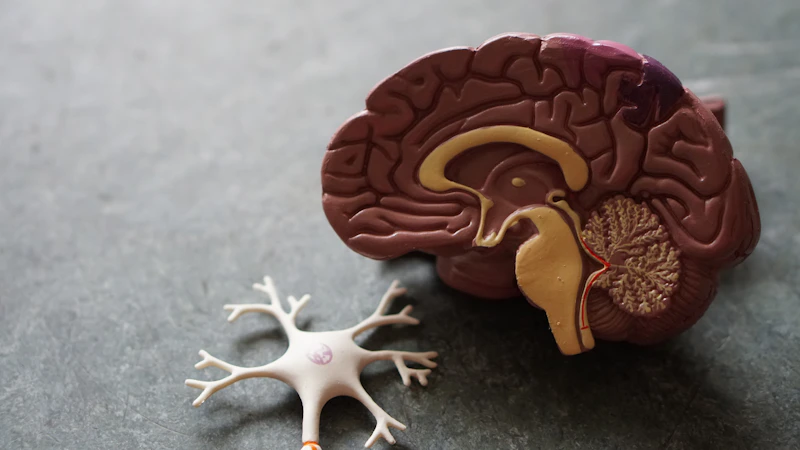
At its core, the brain is an organ composed of approximately 86 billion neurons, which form a vast, interconnected network capable of transmitting information at speeds up to 268 miles per hour. It serves as the master regulator of the entire human organism, interpreting environmental stimuli through the senses and converting that data into actionable responses. The brain operates within a specialized biological-circuitry that ensures messages reach the correct destination with millisecond accuracy. This organ is divided into distinct regions, such as the cerebrum, cerebellum, and brainstem, each holding responsibility for specialized tasks like vision, balance, or heartbeat regulation. Without this centralized management, the body would lack the ability to coordinate complex actions or process the massive influx of sensory data we encounter daily.
2. How It Works — specific numbers and named sources inline, AND one named real-world example
According to the National Institutes of Health (NIH), communication within the nervous system relies on both electrical pulses called action potentials and chemical messengers known as neurotransmitters. When a neuron reaches a threshold, it fires a signal across a synapse, a gap between nerve cells, which can occur up to 1,000 times per second in high-activity areas. This electrochemical signaling process is highly efficient, utilizing sodium and potassium ions to maintain a resting membrane potential of approximately -70 millivolts. A clear real-world example of this system is the study of Olympic sprinter Usain Bolt, whose extreme performance demonstrates the brain's ability to minimize synaptic latency; his reaction times to starting signals are often under 0.15 seconds, proving how rapidly the motor cortex can trigger muscle fiber contractions through the somatic-nervous-system. These rapid signals move through the spinal cord, which acts as the body's primary conduit for information relay, ensuring that the brain and peripheral muscles remain in constant, high-fidelity synchronization.
3. Why It Matters
Our survival and ability to interact with the world depend entirely on the brain's capacity to process information and maintain physical functionality. If this control center were to falter, we would lose the ability to regulate critical autonomic systems like breathing, blood pressure, and body temperature. Furthermore, the brain's plasticity allows us to learn new motor skills and adapt to environmental changes, which is vital for human evolution and individual growth. By maintaining a healthy brain, individuals ensure the longevity of their cognitive and motor capabilities throughout their lifespan. Scientific research into these functions also provides essential insights into treating neurological disorders and developing advanced prosthetics that interface directly with neural signals.
| Function Type | Primary Location | Key Mechanism | | :--- | :--- | :--- | | Motor Control | Cerebellum | Synaptic Signaling | | Homeostasis | Hypothalamus | Hormonal/Neural Regulation | | Sensory Input | Cerebral Cortex | Electrochemical Impulses | | Vital Functions | Brainstem | Autonomic Reflex Arcs |
4. In Summary — 2-3 sentence recap.
The human brain functions as a complex network of neurons that coordinate all bodily movements and physiological processes through lightning-fast electrochemical signaling. By integrating sensory information and issuing motor commands, it sustains life and enables every human capability from fundamental survival to advanced thought.
5. Further Reading
- https://en.wikipedia.org/wiki/Brain
- https://www.ninds.nih.gov/health-information/public-education/brain-basics
- https://www.nature.com/scitable/topicpage/the-neuron-is-the-functional-unit-of-14120367
- https://www.ncbi.nlm.nih.gov/books/NBK234146/
Common Misconceptions
We only use ten percent of our brain capacity.
Brain imaging technology, such as fMRI, shows that almost all parts of the brain have a known function and are active throughout the day.
The brain is a single, uniform organ.
The brain consists of specialized regions, such as the cerebellum for balance and the frontal lobe for decision-making, each handling distinct tasks.
Frequently Asked Questions
How fast do nerve impulses travel?
Signals can travel through nerve fibers at speeds up to 120 meters per second, or roughly 268 miles per hour.
Does the brain feel pain?
Surprisingly, the brain itself contains no pain receptors, which is why surgeons can perform brain surgery while a patient is awake.
What is the difference between the brain and the spinal cord?
The brain is the decision-making center, while the spinal cord acts as the primary pathway for signals traveling between the brain and the rest of the body.
How many neurons are in the human brain?
The average adult human brain contains approximately 86 billion neurons.
Key Terms
- Neuron
- A specialized cell that transmits nerve impulses throughout the body.
- Neurotransmitter
- A chemical messenger that carries signals between neurons at a junction called a synapse.
- Central Nervous System
- The complex of nerve tissues that controls the activities of the body, comprising the brain and spinal cord.
📖 Get AI explanations on related topics:
Explore Brain at every level
Get a Brain explanation tailored for Kid, Teen, and Expert levels — with cited sources and follow-up quizzes.
Explain Brain for me